BlogJuly 10, 2026


AI is frequently discussed in terms of its capabilities. Is it more intelligent, quicker, more fluent, or more useful?
These are important questions, but they don't tell the complete story. In reality, people frequently rely on systems that don't initially seem the most impressive at first. They are the ones whose behaviour makes uncertainty visible in a way people can recognise and work with.
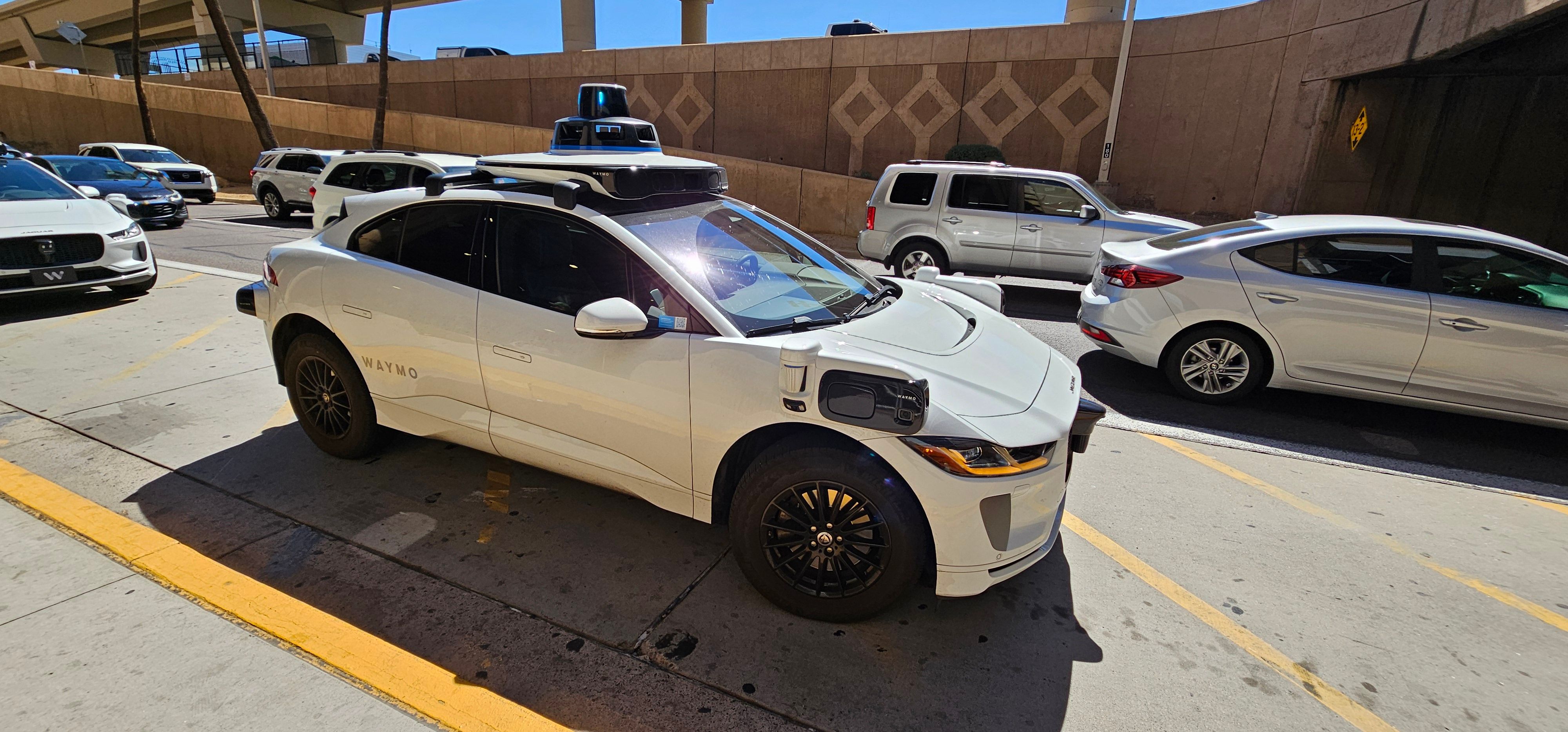
I was reminded of that after travelling in a Waymo. The novelty of sitting in an autonomous vehicle wasn't really fascinating part, that wears off pretty quickly. Something more particular stuck with me: the way the system acted when its surroundings became awkward.
It made no attempt to appear clever. It didn't boldly navigate every uncertain issue with haste. It slowed carefully when things were unclear. It acted cautiously when the circumstances were unknown. It showed its caution. It seems more inclined to hesitate and express uncertainty at times when a human driver may have relied on instinct and continued.
This is significant since trust is not solely based on talent. It is also based on how a system responds to unfavourable circumstances. In this way, the true lesson had nothing to do with driverless cars per se. It was about how reliable systems typically feel when they are in close proximity to uncertainty. They don't always appear daring or carefree. They frequently appear cautious.
A lot of AI has the opposite effect. It is intended to feel smooth. It responds fast, writes smoothly, and maintains the conversation with almost no discernible hesitation. This can make a system seem impressive, but it can also make it more difficult to evaluate it accurately. A system that always looks confident does not necessarily deserve confidence.
Sometimes the smoothness is the issue. The burden shifts to the consumer when ambiguity is concealed beneath polished output. It is up to the user to determine if the response is indeed trustworthy or just provided in a way that seems trustworthy. For casual use, where the stakes are low and the penalties of making a mistake are minimal, that might be acceptable. In technical or engineering contexts, it is far more dangerous because choices can be influenced by a confident response long before anyone pauses to consider how solid the ground actually is.
One of the difficult aspects of contemporary AI is this. When a system is being the least truthful about its inherent limitations, it can appear to be the strongest. Even when the mission has become unclear, vague, or reliant on knowledge it doesn't actually have, it can continue to generate, continue the conversation, and appear calm. That may appear competent from the outside. In actuality, it can just be a sophisticated method of expressing uncertainty.
For this reason, fluency and trustworthiness are not the same. An answer may seem more certain than it should if it is presented in a compelling manner. Weak footing may be more difficult to detect on a smooth interface. The illusion of intelligence begins to operate against trust rather than in favour of it if the user is unable to discern when the system is sound.
Trustworthy systems often feel slightly different. They may appear narrower, slower, or less eager to impress. They might qualify their responses, reveal uncertainty, or refrain from feigning certainty in the absence of it. Since they are not continuously attempting to maintain the appearance of effortless expertise, they may occasionally even feel less extraordinary.
That is not a flaw. It frequently indicates a better-designed system. People don't need AI systems to act like they are humans. They must act in a way that makes it simpler to see their boundaries. A reliable system is not one that never faces difficulties. It aids the user in understanding when prudence is necessary, when discretion is still important, and when the system might be going beyond what it should.
That's one of the reasons the Waymo example stuck with me. Acting at ease or instinctively did not boost confidence. By displaying restraint, it increased self-assurance. Its actions revealed that ambiguity had not been disregarded or minimised. The way the system reacted had taken that into consideration.
The same lesson, in my opinion, applies to AI far more widely. As AI systems progress from demos to meaningful work, the key question is not simply whether they can produce an answer. It is whether their actions assist users in determining when an answer should be trusted, when it should be verified, and when the system is getting close to the limit of what it can consistently handle.
That's where trustworthy AI starts not with absolute assurance but with actions that highlight uncertainty.
The remainder of the series starts at this point as well. If trustworthy behaviour is important the next question is why so many AI systems fail to provide it. Most of the time the model's flaws are not the only explanation. It is that when things get messy the surrounding system does not do enough to maintain conduct that is dependable, bounded, and unambiguous.
Ultimately at some point the capabilities of these systems won't be the only factors influencing AI's future. It will also depend on how well they are constructed so that people can evaluate, question, and genuinely rely on them.
This piece is a part of our Building Trustworthy AI Systems series, which examines how system design, control, and reliability affect whether AI can be trusted for in practical tasks.
These concepts guide the creation of Cyclone Sage , our AI assistant for MCNP, which is being developed with an emphasis on dependable, structured system design.